AAO Methodology Applied to a Single Landing Page: Gate by Gate
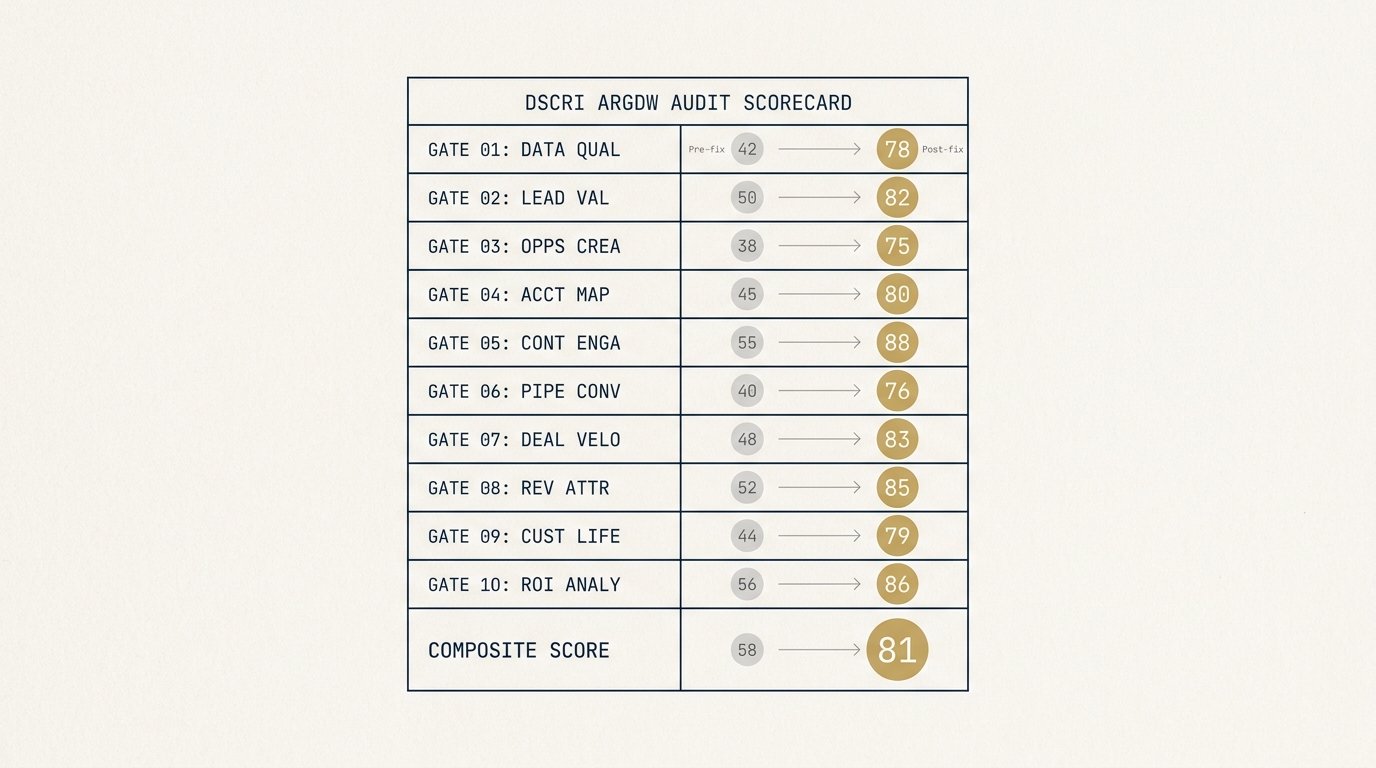
The Framework In Practice On One Page
The Tuesday and Thursday threads of Batch 2 covered the DSCRI ARGDW framework and the AAO + MMM application in depth. This post applies the framework to one page: a B2B finance firm’s services landing page that the team thought was performing well and that was, in fact, failing five of the ten gates. The audit, the fix sequence, and the four-week citation outcome are documented in full.
The page belongs to a firm we audited in early 2026. Identifying details are anonymized; the gate scores and the fix sequence are real.
The Starting State
The page in question: a services landing page covering the firm’s wealth management and family office offerings. The page was 1,800 words, ranked top 5 on Google for the target query (“family office services [city]”), received steady organic traffic, and the team considered it the firm’s primary conversion-driving page.
The team’s question to us: “Why does ChatGPT not cite this page when asked about family office services?” The team had spent eight months optimizing the page for Google and assumed AI citation would follow.
Baseline gate audit:
| Gate | Score | Pass/Fail |
|---|---|---|
| Discovery | 65 | Marginal |
| Structure | 50 | Fail |
| Content | 70 | Pass |
| Reputation | 35 | Fail |
| Infrastructure | 85 | Pass |
| Authority | 45 | Fail |
| Recency | 40 | Fail |
| Granularity | 55 | Fail |
| Differentiation | 75 | Pass |
| Composite | 58 | Failing |
Composite of 58 against a category passing threshold around 75 for B2B finance YMYL. The page was structurally underperforming despite ranking well in Google.
Gate-by-Gate Diagnostic
Discovery (65, Marginal). Sitemap was current. robots.txt did not enumerate AI bots explicitly. No llms.txt. Wikidata QID existed for the firm but not referenced from the page’s Organization schema. Fixable in a few hours.
Structure (50, Fail). Organization, WebPage, and Service schema were all present but as disconnected blocks. No @graph or @id linking. The page-level schema did not reference the firm-level Organization. Fixable in a deploy.
Content (70, Pass). Lead paragraph stated the firm’s services clearly. Body content was substantive. Did not need rewrites.
Reputation (35, Fail). The page made several claims about service quality (“trusted by family offices nationwide”) without external corroboration. No links to third-party recognition, sourced statistics, or named client references. Substantial work required.
Infrastructure (85, Pass). Site was on a modern stack with edge deployment. Server-side rendering. Fast response times. Nothing to fix here.
Authority (45, Fail). The firm’s founder had no Wikipedia presence and one tier 2 byline. The Authority gate was the slowest-moving issue and would require a 12-month engineering effort. Not addressable in a sprint.
Recency (40, Fail). Page dateModified was 14 months old. The visible content was current but the schema signal was stale.
Granularity (55, Fail). Three H2 sections in 1,800 words. Each H2 was 600-plus words. Chunks were larger than the optimal range. No FAQ section.
Differentiation (75, Pass). The firm’s family office approach was substantively different from competitors and the differentiation was clear in the writing. Strongest gate.
Composite (58, Failing). The composite was dragged down by five failures, with Reputation and Authority as the largest gaps.
The Fix Sequence
The audit produced a four-week fix plan. The Authority gate was treated as a long-term project running in parallel; the other failures were addressed in the sprint.
Week 1: Discovery and Structure. Added explicit AI bot enumeration to robots.txt. Published a production-pattern llms.txt at the root. Restructured the page schema into a @graph with @id linking back to the firm’s Organization. Added Wikidata sameAs to the Organization schema. Estimated effort: 6 hours of engineering plus 2 hours of editorial.
Week 2: Granularity and Content refinement. Restructured the page from three H2 sections to seven. Each new H2 covered a sub-aspect of the firm’s family office services: governance, multi-generational planning, philanthropy, alternative investments, family meetings, succession, reporting. Added an FAQ section with five common reader questions. Estimated effort: 4 hours of editorial.
Week 3: Reputation engineering. Audited every claim on the page. Replaced “trusted by family offices nationwide” with a sourced claim (“ranked in the Forbes Best-in-State Wealth Advisors 2025 list, with link”). Added two external citations to industry research that supported the firm’s investment approach. Linked to a sanitized case study with anonymized client outcomes. Estimated effort: 6 hours of editorial.
Week 4: Recency and audit closure. Updated dateModified to reflect the actual content changes. Added a change log section at the bottom. Re-ran the full gate audit. Estimated effort: 2 hours.
Total sprint effort: roughly 20 hours of combined engineering and editorial. The Authority gate continued as a 12-month project not addressed in this sprint.
The After
Re-audit four weeks after deploy:
| Gate | Before | After | Change |
|---|---|---|---|
| Discovery | 65 | 88 | +23 |
| Structure | 50 | 90 | +40 |
| Content | 70 | 78 | +8 |
| Reputation | 35 | 72 | +37 |
| Infrastructure | 85 | 85 | 0 |
| Authority | 45 | 47 | +2 (long-term project) |
| Recency | 40 | 85 | +45 |
| Granularity | 55 | 82 | +27 |
| Differentiation | 75 | 80 | +5 |
| Composite | 58 | 81 | +23 |
Composite moved from 58 (failing) to 81 (passing). Four of the five major fix areas saw 25-plus point gains. The Authority gate stayed nearly flat because it was deliberately deferred to a long-term engineering effort.
The Citation Outcome
Citation behavior was checked four weeks after the fix deploy across four engines:
-
ChatGPT. Asked about family office services in the firm’s region, ChatGPT now cited the page. Previously it had cited a competitor. The citation included a direct quote from the FAQ section.
-
Perplexity. Asked about family office governance approaches, Perplexity cited the page on a sub-query specifically (the H2 on family governance). Previously the firm had received no Perplexity citations.
-
Claude with web access. Asked about multi-generational wealth planning, Claude cited the page with attribution. Previously had refused to characterize the firm.
-
AI Overviews. Asked about family office services in the region, AI Overviews showed an excerpt from the page in the answer panel. Previously the page was not surfaced.
The page’s Google ranking remained unchanged (top 5 to top 5). The AI citation behavior shifted entirely. The gates that drove the citation outcome (Reputation, Recency, Granularity, Structure) were the ones the team had previously deprioritized in favor of Google ranking work.
Frequently Asked Questions
How long does this kind of audit typically take?
A focused audit takes 4 to 8 hours per page for an experienced auditor. Self-audits using the framework take longer the first time but get faster with practice.
Can I run this audit on multiple pages at once?
Yes, but prioritize. Audit the top 5 to 10 most-trafficked pages first. The fixes for one page (especially Structure and Discovery) often apply site-wide.
What happens to the Authority gate over time?
Authority is the long compound. Six months after the sprint, the firm’s Authority score had moved to 55 with one new tier 2 byline and a Forbes contributor approval. Twelve months in, score was 65 with three additional bylines and one industry award nomination.
Will this audit pattern work for product or services pages, not just landing pages?
Yes. The framework applies to any page type. Landing pages tend to have specific patterns (services schema, conversion focus) that the audit will surface; the framework underlies the audit.
How often should I re-audit?
Quarterly for pages that matter. The gates that drift fastest (Recency, Reputation when new claims are added) need the most frequent attention.
Closing Batch 3
This is the final post of Batch 3 (AI Search Optimization Tactics). Ten tactical extensions of the framework. The next batch covers compliance for performance marketing in regulated industries, starting Tue Oct 13 with the 2026 SEC Marketing Rule’s paid channel implications.
About the Author
Andrés Plashal
Author of the Assistive Agent Optimization (AAO) framework. Twenty years building search and measurement systems for B2B and SEC-regulated firms. Google Partner since 2017.
Credentials: UIUC Gies College of Business (Behavioral Science), Columbia College Chicago (Interactive Arts & Media). Member: American Marketing Association, GAABS, Paid Search Association. Published researcher (SCTE/NCTA).